How a Financial Control System Gets Results

A business may watch its cash drawer closely while leaving million-dollar decisions about working capital, debt, investments, and leasing without a consistent process. Preventing Mary Lou from borrowing a fin from the till matters, but it is rarely the largest financial risk. A financial control system gets results when it directs equal discipline toward the decisions that shape cash flow, capital needs, and long-term financial performance.
The Sarbanes-Oxley Act made internal control over financial reporting a formal priority for public companies. Under the SEC’s Section 404 internal-control reporting rules, reporting companies provide management’s assessment of internal control, while auditor-attestation requirements depend on filer status. Private companies and many small and medium-sized businesses, or SMBs, may not face the same SEC regulations, but investors, creditors, owners, and managers still depend on accurate financial statements and disciplined financial decisions.
What Is a Financial Control System?
A financial control system is the coordinated set of policies, procedures, responsibilities, records, approvals, reviews, and performance measures used to protect assets and produce reliable financial information. It connects day-to-day transactions with larger financial goals. The system should help a company prevent errors, detect exceptions, understand the meaning behind the numbers, and improve the decisions that determine results.
At many public companies, the internal control system includes volumes of instruction-like procedures that document activities. Documentation is necessary, but procedures alone do not prove that a control works. A useful system identifies the objective of each control, assigns an owner, defines the evidence that should exist, and explains what happens when the evidence reveals a problem.
Financial Control Systems Get Results
Results begin with clear goals. A reconciliation control may seek accurate account balances, while a credit control may seek lower bad-debt exposure without blocking sound sales. The control owner needs a measurable standard, a review schedule, and a way to escalate exceptions. Without those elements, an activity can be repeated faithfully while the underlying financial process continues to perform poorly.
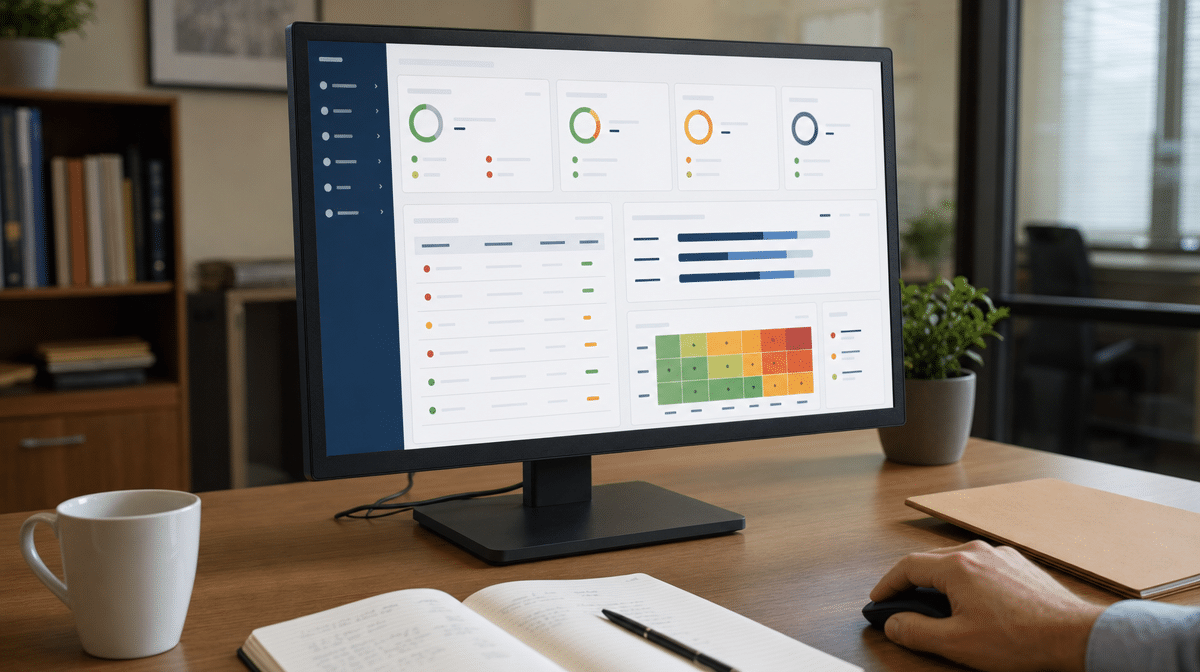
Clear goals and business metrics provide a better indicator of effectiveness than the number of procedures on a shelf. Useful measures might include days sales outstanding, inventory turnover, close-cycle time, forecast variance, exception aging, or the percentage of reconciliations completed on schedule. The right measure depends on the process and the risk, not on a generic checklist.
What Is the Point of a Financial Control System?
If a company is taking the time and effort to develop a procedure-based financial control system, it should use that work to improve performance as well as compliance. The point is to understand the major financial processes, direct attention toward material risks, and build feedback into normal operations. That requires a deliberate sequence:
- Understand the major financial processes that move cash, create obligations, value assets, and produce financial statements.
- Establish key finance policies and goals, including performance goals as well as accurate financial reporting.
- Determine which processes create the greatest level of risk or materiality in reaching financial goals.
- Prioritize development of the control system according to materiality, risk, decision frequency, and business impact.
- Incorporate best practices and a continual improvement philosophy so effective processes become stronger over time.
This sequence keeps a company from treating every control as equally important. A low-value purchasing error, an inaccurate inventory valuation, and an unreviewed debt covenant do not carry the same consequences. Materiality and risk help leaders put review time, approval authority, and monitoring effort where failure would matter most.

COSO’s Internal Control framework explains that internal control has value beyond compliance and external financial reporting. That broader purpose matters to an SMB that has a few investors or creditors but no direct SOX reporting obligation. The company still needs confidence that its information is reliable, its resources are protected, and its decisions support operating and strategic objectives.
How Can Office Financial Processes Improve?
Discussions of improving processes are too commonly relegated to the production floor. Office processes deserve the same attention. A late bank reconciliation, weak collection follow-up, incomplete lease analysis, or inconsistent capital request can consume cash just as surely as scrap, rework, or downtime.
Public companies may begin this work in finance and accounting departments because compliance requires documented control, but the same discipline applies among privately owned SMBs. The business still has to establish key finance policies, set performance goals, produce accurate financial statements, and actively manage financial aspects like working capital, debt and investments, and leasing. Taking advantage of a financial control system means using clear goals to decide what should happen, then comparing the actual process results with those expectations.
Focus on Finance
A lack of focus on finance is especially dangerous when growth makes familiar routines harder to manage. Capital plans may remain informal. Working capital may be discussed only when cash becomes tight. Financial statement analysis may stop at confirming that the statements balance, instead of using ratio analysis to understand liquidity, leverage, profitability, and operating trends.
Controls should make these processes visible before a crisis. Receivables aging can trigger collection action. Inventory thresholds can expose cash trapped in slow-moving stock. A capital plan can show when debt, equity, or internally generated cash will be needed. Review controls can test assumptions before managers commit to investments, asset acquisitions, or leasing arrangements.

Each process needs an owner and a cadence. The controller may review balance-sheet reconciliations monthly. A credit manager may review overdue receivables weekly. Leadership may review capital structure and covenant compliance quarterly. The schedule should match the speed at which exposure can grow and the time available to correct it.
Making Money With Cash
Do you know whether you are earning an adequate return on invested capital? Do you know what it costs to carry accounts receivable, inventory, or idle cash? These are hard questions, but they should be asked before a company raises debt or equity capital, signs a long lease, or approves a major asset acquisition.
A decision control does not need to eliminate judgment. It should make judgment more consistent. A financing decision might require a current cash forecast, several rate and volume scenarios, covenant review, and approval at an authority level tied to the amount. An investment decision might compare expected return, downside exposure, liquidity needs, and the cost of capital under the same documented assumptions.

Now return to Mary Lou and the cash drawer. A business may count the till every shift to prevent a minor shortage while having no consistent method for managing receivables, debt, inventory, or investments. The control over petty cash is prudent, but the imbalance in attention is not. High-level financial processes can produce losses far larger than the cash drawer when they go bad.
How Does a Financial Control System Get Results?
A financial control system gets results by connecting priorities to action. It identifies the process, risk, objective, owner, evidence, metric, and response for each important control. Managers can then see whether the control operated, whether the process achieved its goal, and whether an exception requires correction or a redesign.
Focusing solely on rote and mundane activities does little to improve overall cash flow and the cash-to-cash cycle. Financial control systems should continually improve key aspects of the financial operation, including:
- Regularly reviewing and improving the overall capital structure.
- Using a capital plan to minimize the cost of capital while strengthening the debt-to-equity position.
- Managing working capital so excessive inventories and receivables do not sap financial resources.
- Ensuring proper calculations and scenarios are explored when making debt, investment, or leasing decisions.
- Maximizing returns while minimizing unnecessary costs for cash and merchant accounts.
Use Metrics, Exceptions, and Corrective Action
Performance metrics show whether a process is moving toward its goal, but a metric should lead to a response. If overdue receivables rise above a threshold, the system should identify who reviews the accounts, how quickly collection plans are created, and when unresolved balances escalate. If forecast variance widens, managers should examine the assumptions and adjust the forecast process rather than simply recording the miss.
Exception reports are most useful when they are short enough to act on and specific enough to assign. A report with hundreds of unexplained items becomes another routine. A risk-based report that highlights material, aging, or unusual transactions gives control owners a practical work queue and gives managers evidence that corrective action is closing the gap.
Build Continual Improvement Into Internal Control Systems
A control system of well-defined processes is not only about control or compliance. It is also about consistently striving to do a little better. Review meetings should ask whether the control still addresses the most important risk, whether the evidence is useful, whether delays or duplicate steps have appeared, and whether a better preventive or detective control is available.

Control owners should record what failed, why it failed, what changed, and whether the change worked. That learning closes the loop between control and performance. It also prevents a company from adding more approvals whenever something goes wrong, even when the better answer is clearer information, stronger system configuration, a simpler process, or earlier review.
Internal control systems designed only to achieve compliance are doing the bare minimum. They miss an opportunity to improve decisions, release working capital, strengthen reporting, and create a competitive edge. Any size or type of company can use a continual improvement approach to build an effective internal control system that produces reliable evidence and better financial results.
The practical test is simple: can managers explain which financial processes matter most, who owns each control, what evidence proves it operated, what measure shows the result, and what happens when performance misses the goal? If the answers are clear and the measures are improving, the financial control system is doing more than documenting compliance. It is helping the business perform.
Frequently Asked Questions
What Is a Financial Control System?
A financial control system is the coordinated set of policies, procedures, responsibilities, records, approvals, reviews, and measures used to protect assets, produce reliable information, and support sound financial decisions.
How Does a Financial Control System Improve Business Results?
It connects material risks and financial goals to named owners, evidence, performance metrics, exception handling, and corrective action. That structure helps managers improve cash flow, working capital, reporting, and capital decisions.
Which Financial Processes Need the Strongest Controls?
The strongest controls belong around processes with the greatest materiality, risk, frequency, or business impact. These often include cash, receivables, inventory, financial reporting, debt, investments, leasing, and major asset acquisitions.
How Should an SMB Prioritize Financial Controls?
An SMB should map its major financial processes, set clear goals, assess materiality and risk, and direct limited review effort toward failures that could cause the largest loss or reporting problem.
Why Is Continual Improvement Important in Financial Controls?
Risks, systems, volumes, and business goals change. Continual improvement keeps controls relevant, removes unnecessary steps, strengthens weak evidence, and turns exceptions into better financial processes.